

When people hear “AI advertising film”, most imagine typing one sentence and receiving a finished film. In reality the process looks far more like a classic production than you would expect: first the idea, then the script, then the visual world, then the edit. What changes is the camera and the set; none of the creative decisions disappear.
1. Idea and script
Everything still starts with a single question: what should this film make the viewer feel? AI can generate an enormous number of images, but it cannot decide why a given image belongs there. So the first job is to reduce the brand’s message to a clear story of a few sentences and write it out scene by scene.
2. The visual world
After the script comes the look of the film: colour palette, light, location, camera language. Reference frames are generated at this stage and chosen together with the brand. The aim is for the film to feel as if it takes place in one world from the first second to the last. The most common problem in AI films is that every scene looks as though it was taken from a different film; this preparation is what prevents it.
3. Generating the scenes
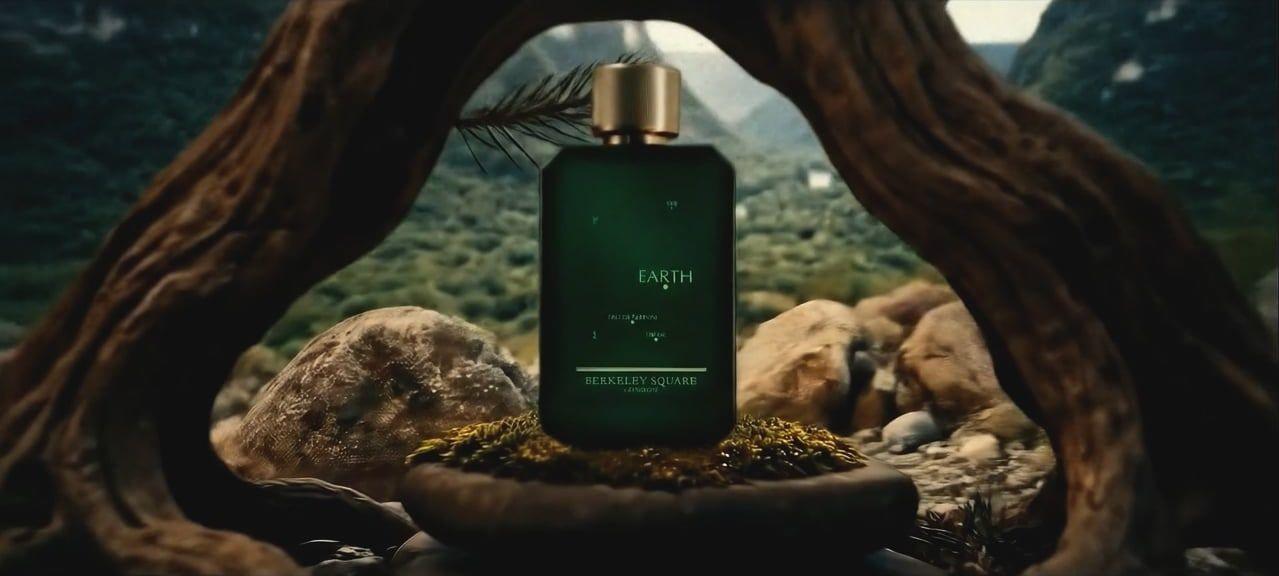
This is where production proper begins. Many attempts are made for each scene, the best are selected and the inconsistent ones discarded. Brand elements such as the product or the logo need particular care; a perfume bottle being the same bottle in every frame does not happen by itself.
4. Edit, sound and colour
The generated scenes are edited just as in a conventional film. Rhythm, music, sound design and colour grading are what turn footage into a film. Good sound design is one of the most important things that makes an AI-generated image believable.
AI replaces the camera and the set; it does not replace the idea, the taste or the decision.
What the brand needs to bring
What a good AI film needs from the brand is no different from a classic production: a clear goal, material that describes the brand’s identity, and a single person who can make decisions. For a product film, high-resolution images of the product make the work considerably easier.
In our work for Berkeley Square London we treated three different perfume concepts separately and produced a film for each, every one with its own visual world. The process followed exactly the order above: first the character of each perfume, then a world that suits that character, then the scenes.